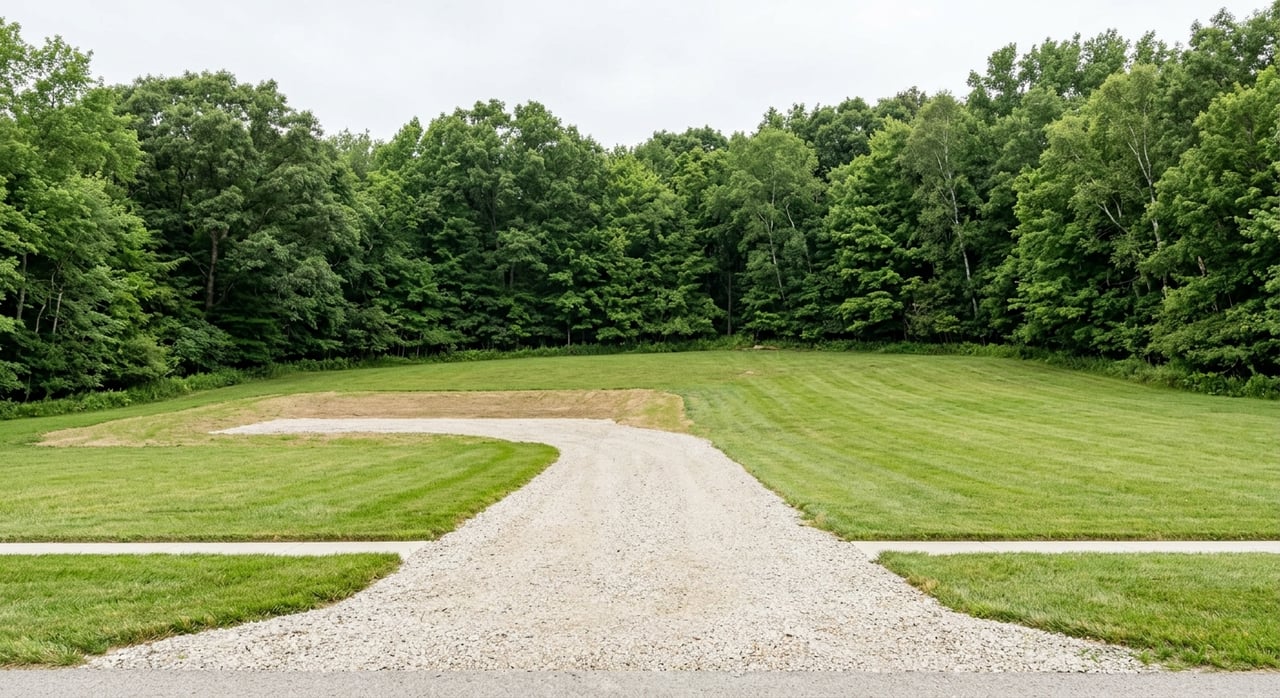
Thinking About Land Near Hanna City? What Buyers Should Expect
July 16, 2026
July 16, 2026
Wondering if that piece of land near Hanna City is a great opportunity or a future headache? You are not alone. Buying land can feel exciting, but it also comes with questions that do not always come up when you buy an existing home. If you are thinking about land near Hanna City, this guide will help you understand what to check before you close and what can shape the property’s long-term value. Let’s dive in.
When you buy a house, you can usually see how the property functions right away. With land, the biggest question is often what you can legally and practically do with it.
Near Hanna City, that starts with jurisdiction. Some parcels are inside the Village of Hanna City, while others are in unincorporated Peoria County. That difference can affect zoning, utility access, permit requirements, and the steps needed before a home can be built.
Before you focus on price, trees, or road frontage, find out who governs the parcel. The Village of Hanna City has its own code, planning resources, annexation information, and utility services. Unincorporated properties are generally handled through Peoria County Planning and Zoning.
That matters because two nearby parcels can have very different rules. One may act more like a village lot with water and sewer nearby, while another may function more like rural acreage that needs private systems and extra approvals.
Zoning is one of the first things to verify on any land purchase near Hanna City. In Peoria County, districts that often matter for buyers include A-1 Agricultural Preservation, A-2 Agricultural, and R-R Rural Residential.
A-1 is designed to conserve farmland and protect the rural landscape. A-2 also protects agricultural land, while allowing limited non-farm residential development. R-R is intended for larger rural homesites that typically use individual wells and septic systems.
If a parcel is in the R-R district, the minimum lot area for most uses is 1 acre, and the minimum width is 150 feet at the building line. Those details can have a big impact on whether a parcel works for your plans.
A listing may describe land as buildable, but that does not always mean the parcel already meets legal lot requirements. Peoria County states that new lots created by a split must meet the applicable minimum lot-size rules.
That means you should confirm the parcel’s legal lot status before closing. If a tract still needs approval or does not meet current standards, your path to building could be more complicated than the listing suggests.
Utility access is often where land deals become much clearer or much riskier. Inside Hanna City, the village offers water, sewer, and garbage service, and residents also have listed providers for gas, electric, phone, cable, and internet.
That can make a village-side lot very different from raw land outside the village. A rural parcel may need a private well and septic system, which can add cost, extra review, and more due diligence before you know whether the site is truly ready for a home.
Here is a simple way to think about it:
| Parcel Type | What to Expect |
|---|---|
| Village lot in Hanna City | May have access to village water, sewer, and other utility services |
| Rural county parcel | May require private well and private septic, plus additional review |
This is one reason two parcels with similar asking prices can have very different total costs.
Online county tools can be very helpful when you first research a parcel. Peoria County offers GIS and Front Desk tools that can show property characteristics and comparable sales data.
Still, the county says its boundary display is only an approximation. If you need exact property lines, a professional survey is the right step.
This point surprises many buyers. Peoria County says it does not require a survey to issue a building permit.
So even if a parcel may qualify for permit review, that does not mean the boundary is fully confirmed. If lot lines, access, or improvements near the edges of the property matter to you, a survey can help you avoid expensive confusion later.
If land has been divided or may be divided, frontage requirements can come into play. Peoria County requires approval through tract survey or subdivision review before land division or the creation of a public right-of-way.
For parcels created in a moderate subdivision, frontage standards apply. The county requires 30 feet of frontage for parcels under 10 acres and 60 feet for parcels 10 acres or larger.
These details matter because a parcel can look usable on paper but still raise access or approval issues. When in doubt, ask for documentation early instead of trying to solve it after you are under pressure to close.
If the property is outside village utility service, private well and septic feasibility can be one of the biggest factors in your decision. The Peoria City/County Health Department reviews and issues permits for private wells and private sewage disposal systems.
The department also requires a valid permit before anyone constructs, alters, or extends a private sewage disposal system. That means you should not assume an older setup can simply be reused without review.
For wells and onsite wastewater systems installed after 2009, records can be reviewed online through the health department. Older records require a FOIA request.
If the land includes existing rural infrastructure, maintenance history matters. The health department advises annual septic inspections and pumping every 2 to 3 years, so ask for records if they exist.
A parcel may look flat, open, and ready to build. That does not always mean development will be simple.
Peoria County states that all development within a Special Flood Hazard Area requires a floodplain development permit before work begins. The county notes that development can include construction, filling, paving, demolition, storage, and land clearing.
Floodplain review is not only about major construction. It can affect basic site work and the overall timeline for getting started.
Peoria County also provides flood-insurance rate map information, base flood elevation data, Letters of Map Change, and elevation certificates. If floodplain questions come up, it is better to sort them out before you buy, not after you own the property.
Even when you are buying land for your own future home, it helps to think about resale. In general, parcels with clear zoning, legal frontage, confirmed utility access, and no floodplain complications may appeal to a wider future buyer pool than parcels with unresolved questions.
That is not a guarantee of future value, but it is a practical way to compare risk. The fewer unknowns a parcel has, the easier it may be to market later.
Hanna City sits along Illinois Route 116, about 10 miles west of Peoria and 10 miles east of Farmington. That location can matter for convenience and future buyer interest.
The village’s business development and TIF planning also focus on redevelopment, infrastructure, and housing growth along Main Street, Runkle Street, and Hanna Street. Because of that, parcels in or near those areas may have a different long-term story than more isolated rural tracts.
Before you move forward on land near Hanna City, make sure you can answer these questions:
The best land purchase is usually not the one that simply looks the prettiest from the road. It is the parcel with the fewest unanswered questions about zoning, utilities, access, boundaries, septic or well feasibility, and floodplain status.
If you are thinking about buying land near Hanna City, taking the time to verify those basics can save you money, stress, and delays later. If you want local guidance as you compare lots in Hanna City, Peoria County, or nearby Central Illinois communities, The Move Smart Group LLC can help you evaluate your options with a practical, informed approach.
Stay up to date on the latest real estate trends.

We love to help our clients and no price of a home is too small or large. We have a marketing plan for all of our customers.

3300 W WILLOW KNOLLS DR STE A PEORIA IL 61614