Bartonville IL Home Prices: What Buyers Actually Get
September 3, 2026
September 3, 2026
A house in Bartonville costs almost exactly the same per square foot as a house anywhere else in Peoria County. That's the number nobody mentions when they tell you Bartonville is "the affordable one."
If you've been comparing Central Illinois neighborhoods on a portal, you've probably seen Bartonville's median price sitting well below Peoria's and assumed you were looking at a discount. As of August 2026, Bartonville's median list price sat somewhere between $154,000 and $157,500, depending on which week's snapshot you caught. Over the same general period, Peoria County as a whole was running a median sale price closer to $179,000, and the city of Peoria itself around $148,000. That gap looks like value. It isn't, not in the way most buyers assume.
Price per square foot is the number that cuts through list-price comparisons, and in Bartonville it's not dramatically lower than the surrounding market. Local MLS-sourced data pegged Bartonville homes at roughly $107 to $112 per square foot in August 2026. Peoria County overall ran about $111 per square foot over the three months ending in May 2026, and the city of Peoria itself came in around $108. Those numbers are close enough that they're describing the same market, not a cheaper one.
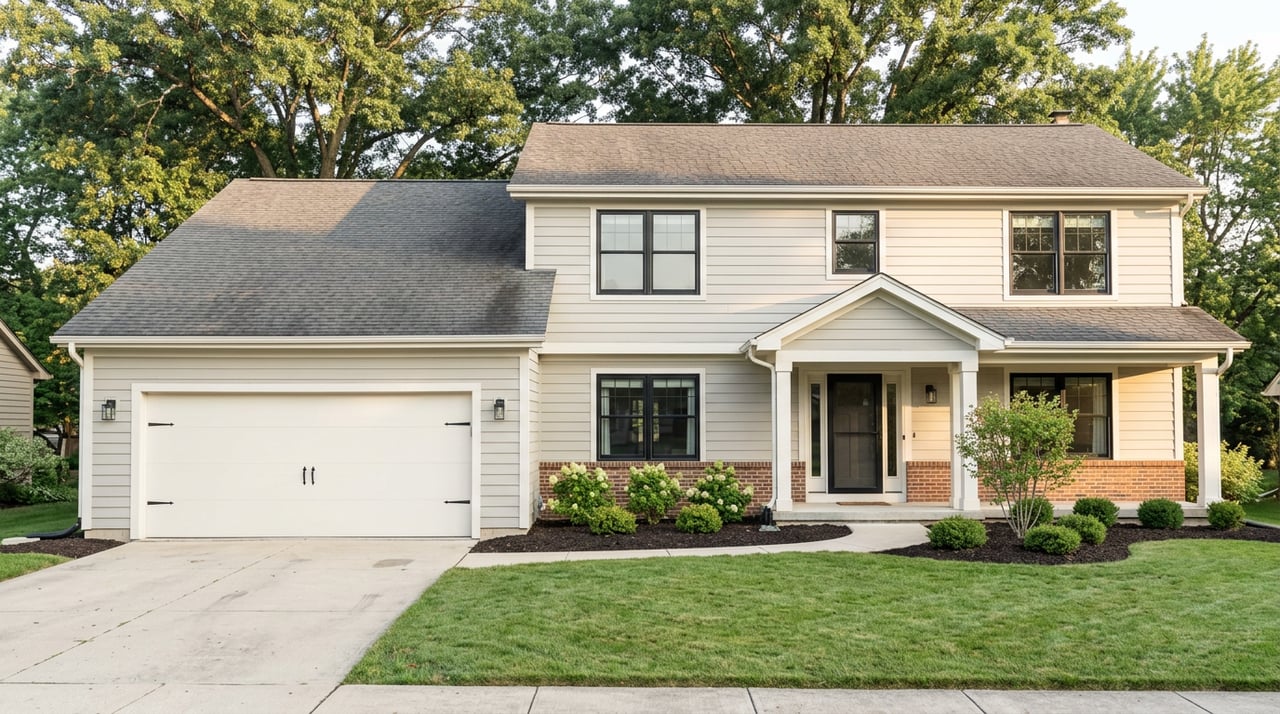
So where does the lower total price come from? Size and age. A recent MLS pull put the average home size in Bartonville at roughly 1,033 square feet, compared to a Peoria County average closer to 1,928 square feet. That's not a rounding difference. It's the difference between a three-bedroom ranch and a home nearly twice its footprint. Bartonville's housing stock leans heavily on ranches and bungalows built in the 1940s, with typical three-bedroom homes trading between $100,000 and $200,000.
Here's the comparison in one place:
| Market | Recent Median Price | Price per Square Foot |
|---|---|---|
| Bartonville | ~$154,000–$157,500 (Aug. 2026) | $107–$112 |
| Peoria (city) | $148,000 (3-mo. avg. through May 2026) | $108 |
| Peoria County (all) | $179,000 (3-mo. avg. through May 2026) | $111 |
If you're comparing Bartonville to a newer subdivision in Dunlap or a larger lot in Brimfield, the per-square-foot math should be part of that comparison, not the list price alone. You're not getting more house for less money. You're getting a smaller, older house for less money, at roughly the same rate per square foot as everywhere else in the county.
A smaller purchase price sounds like a smaller monthly cost across the board, but Illinois property taxes don't work quite that cleanly. Peoria County tax data compiled by Ownwell puts Bartonville's effective property tax rate at about 2.80%, which runs above the Illinois state median of 2.35% and well above the national median of 1.02%. On a home near the town's median price, that works out to a typical annual tax bill in the neighborhood of $2,500.
That's the part of the affordability story that gets skipped. Your purchase price is lower, but your annual carrying cost as a percentage of that price isn't discounted the same way. Illinois taxes fund schools, townships, fire protection, and a long list of overlapping districts regardless of which town you're in, and Bartonville isn't exempt from that structure just because the sticker price is friendlier.
Here's a wrinkle that a listing sheet won't tell you. Alpha Park, the town's 18-acre green space with trails, two playgrounds, a disc golf course, a basketball court, and a softball complex, isn't maintained by a tax-funded park district. The Village of Bartonville says it plainly on its own blog: without a tax-based park district, the town relies on volunteers to keep its parks in shape.
That's a genuinely different model than most Peoria-area towns, and it's easy to confuse with the Alpha Park Public Library District, a separate taxing body established in 1972 that funds the library branch of the same name. The park and the library share a name and a neighborhood, but only one of them shows up as a line item on your tax bill.
This year, the Village's Park Committee is running a comprehensive planning survey to shape Alpha Park's next 10 to 20 years, which suggests the town is actively weighing whether the volunteer model holds up long term. For a buyer, the practical takeaway is this: the park amenities you'd tour today depend on continued volunteer turnout, not a guaranteed levy. That's not a red flag. It's a variable worth understanding before you assume "18 acres of green space" means the same thing here that it means in a town with a dedicated park district tax.
Bartonville's commercial core is small by design, split across two streets that longtime residents describe in geographic shorthand. Garfield Avenue runs along what locals call "the top of the hill," and Adams Street runs along "the bottom." Between them you'll find the town's everyday fixtures: Tyroni's, an Italian restaurant on Adams Street that's been serving the same neighborhood for more than three decades, BG Karaoke Saloon a few blocks over with occasional live bands, Presleys Outdoors on Garfield for anyone who fishes or hunts, and a newer ALDI that's become the closest full grocery option in town.
None of that is dramatic, and that's the point. It's a town built around a two-street commercial strip rather than a shopping district, which matters if your comparison shopping includes towns like East Peoria or Washington with more retail density. Bartonville also sits close to the General Wayne A. Downing Peoria International Airport, a detail that matters more to relocating buyers and investors than to someone just touring open houses.
Bartonville isn't standing still, even if its commercial strip looks unchanged. In April 2026, the Peoria County Board approved a special use permit for a 5-megawatt solar energy facility from Chaberton Solar Seneca LLC on Dietrich Lane, near Limestone Community High School. The project required a special use designation because the land is zoned agricultural, and it cleared the county's Zoning Board of Appeals after some early pushback was resolved before the vote.
It's a modest project in scale, but it's a real one, and it's a sign that Bartonville's edges are still attracting development interest even as its core stays small. Limestone Community High School itself carries a reputation locally for its award-winning robotics program, which matters to families weighing school options alongside price per square foot.
Is Bartonville part of a park district? Not in the tax-funded sense most Illinois towns use. Alpha Park, the town's main recreational space, is maintained through volunteer effort rather than a dedicated park district levy. The separately named Alpha Park Public Library District, established in 1972, is a real taxing body, but it funds the library, not the park.
Why are homes in Bartonville smaller than the county average? The town's housing stock is older, built largely in the 1940s as ranches and bungalows. Recent MLS data shows an average home size in Bartonville of roughly 1,033 square feet, compared to a Peoria County average near 1,928 square feet. The lower total price reflects smaller homes at a comparable price per square foot, not a discount on value.
Does a lower purchase price mean lower total ownership costs? Not entirely. Bartonville's effective property tax rate, around 2.80% according to Peoria County tax data, runs above both the Illinois and national medians. A smaller purchase price helps your monthly payment, but it doesn't erase the tax structure that applies across Peoria County.
If you're weighing Bartonville against another Central Illinois town and want the real math, not just the list price, The Move Smart Group can walk through what a specific property actually costs to own here versus elsewhere in the metro. Schedule a free consultation and we'll help you compare the towns on the numbers that actually matter.
Stay up to date on the latest real estate trends.
We love to help our clients and no price of a home is too small or large. We have a marketing plan for all of our customers.
3300 W WILLOW KNOLLS DR STE A PEORIA IL 61614