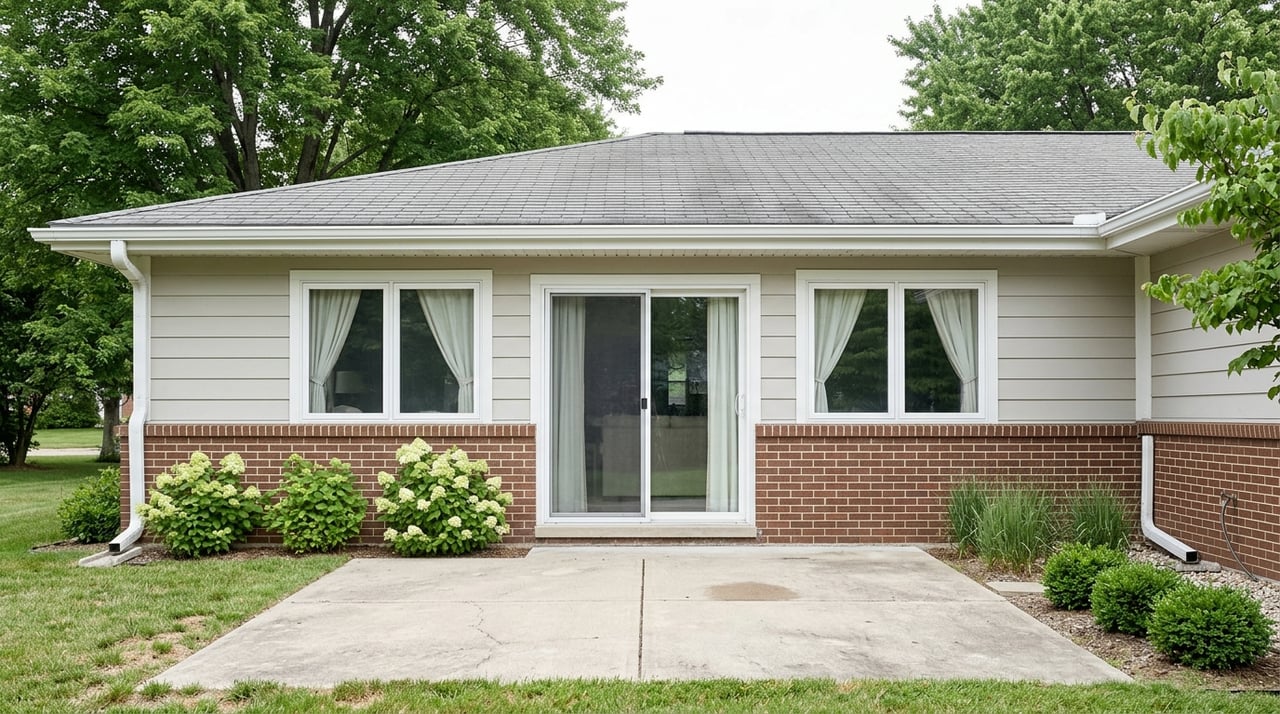
Canton IL Investment Properties: How to Read the Data
April 23, 2026
April 23, 2026
If you are looking at investment property in Farmington or Canton, the numbers can seem simple at first glance. Prices are low compared with much of Illinois, but small-town data can be noisy, and one bad assumption can change the whole deal. This guide will help you read the available data more carefully so you can weigh opportunity, risk, and next steps with more confidence. Let’s dive in.
Farmington and Canton both offer a lower entry point than many Illinois markets. Census data for Farmington shows a median owner-occupied home value around $101,300, while Census QuickFacts places Canton around $107,100. That is well below Illinois' median owner-occupied value of $263,300, which is one reason investors often take a closer look at smaller communities like these.
Low pricing can create room for cash flow or value-add plans, but it does not remove risk. In markets with fewer sales, pricing signals can swing fast from month to month. That means you need to look at more than one data point before deciding what a property is really worth.
The biggest mistake many investors make in small markets is treating one monthly median sale price like a hard rule. Redfin market data for Farmington reported a median sale price of $47,000 in January 2026, but that was based on only 2 sales. In Canton, Redfin reported a median sale price of $121,500 in March 2026 on 18 sales.
Those numbers are useful, but they are not enough on their own. In a low-volume market, one distressed sale, one fully renovated home, or one unusual transaction can skew the median. If you are underwriting a deal, it is smarter to use sale data as a directional guide and then compare condition, location, layout, and likely repair needs.
When you analyze a possible purchase in Farmington or Canton, keep your assumptions tight.
That approach matters even more in smaller towns, where condition and price discipline often matter more than broad market momentum.
Rents in Fulton County sit in an affordable range, but public rent sources do not line up perfectly. HUD's FY2025 Fulton County FMR table lists $663 for a 1-bedroom, $870 for a 2-bedroom, $1,126 for a 3-bedroom, and $1,256 for a 4-bedroom unit. Those figures give you a solid public benchmark for stress-testing potential rental income.
Other data sources show a similar band, but not the same exact numbers. Point2 demographic data for Farmington estimates median gross rent at $918, while Canton is estimated at $766 on Point2's Canton demographics page. Zillow's Canton rental page, cited in the research, shows an average rent of $775 with 12 available rentals, which supports the idea that you should not rely on one source alone.
In smaller markets, rent data is best used as a reality check, not a guarantee. Asking rent, average rent, fair market rent, and gross rent can all measure slightly different things. If a deal only works at the highest number you can find online, it may not be a strong deal.
A safer strategy is to ask:
Neither Farmington nor Canton appears to be a heavily renter-dominant market. Point2 reports for Farmington show 71.8% owner-occupied, 28.2% renter-occupied, and 13.8% vacant or unoccupied. In Canton, Point2 reports 67.5% owner-occupied, 32.5% renter-occupied, and 12.0% vacant or unoccupied.
That matters because it shapes how easy or difficult absorption may be. These numbers suggest you should not assume endless renter demand just because purchase prices are affordable. A property still needs to stand out on price, condition, and layout.
Farmington's renter profile looks a bit stronger on paper. Point2 estimates renter median household income at $53,917 in Farmington with a rent-to-income ratio of 20.4%. In Canton, renter median household income is estimated at $33,355 with a rent-to-income ratio of 27.6%.
That does not automatically mean Farmington is the better investment market. It does suggest that Farmington renters may have a little more room in their budgets before rents feel stretched. For an investor, that can be a useful signal when comparing similar properties across both towns.
The local housing mix in Farmington and Canton points to different investment considerations. In Farmington, the visible inventory highlighted in the research leans toward small detached homes, occasional small income properties, and value-add opportunities. That often fits a straightforward small-town strategy focused on single-family rentals or selective small multifamily deals.
Canton comes with a different kind of caution flag. Point2's Canton demographics place the median construction year at 1958, with 31.4% of homes built before 1940 and another 7.0% built in the 1940s. Older housing stock can create opportunity, but it can also add repair risk very quickly.
If you are comparing deals in Canton, inspection quality matters just as much as purchase price. Older homes can come with higher odds of issues involving:
A property that looks inexpensive on paper can become much more expensive once those items are addressed. In a lower-price market, that margin for error is often thinner than buyers expect.
If your plan involves anything beyond a simple buy-and-hold, zoning review needs to happen before you close. Canton makes this easier than many small towns because the city clearly separates R-1 and R-2 single-family, R-3 two-family, and R-4 multi-family districts, along with other zoning categories. That means a duplex or small multifamily plan should be verified by parcel and district, not assumed based on surrounding properties.
Farmington also deserves close review before purchase. The city's code and ordinance portal includes both zoning information and a Rental and Vacant Property Inspections ordinance. If you are buying a rental or planning a change in use, it is worth confirming allowed use, any registration or inspection requirements, and whether your intended occupancy or conversion triggers additional approvals.
There is no single winner between Farmington and Canton. The better market depends on what kind of investor you are and how much complexity you want to manage.
| Factor | Farmington | Canton |
|---|---|---|
| Market size | Smaller market | Larger and generally more liquid market |
| Entry profile | Very low-price opportunities | Still affordable, with more sales activity |
| Rent picture | Slightly stronger renter affordability on paper | Lower renter income profile on paper |
| Housing stock | Small detached homes and occasional small income properties | Older stock, often more rehab-sensitive |
| Zoning clarity | Verify through city code portal | Published district categories are especially useful |
If you want a simpler property type and can be patient with a very small market, Farmington may be worth a closer look. If you want more transaction activity and are comfortable being very careful on condition and zoning, Canton may offer more options.
In both towns, the safest play is often the simplest one. Buy something with a realistic price, a manageable repair list, and a clear use case. Leave room in your budget for slower resale timing, modest rent assumptions, and inspection findings that need attention.
That is especially important because the research suggests homes can still move in roughly five to six weeks when priced well, but sale counts are small enough that market headlines can be distorted. In practical terms, your exit strategy should be built around condition, pricing discipline, and flexibility rather than hope.
If you are weighing an investment purchase in Farmington or Canton, local guidance can help you sort through the data, compare property types, and focus on the deals that make sense for your goals. The Move Smart Group LLC offers owner-led, relationship-focused guidance for buyers and sellers across Central Illinois, and we would be glad to help you evaluate your next move.
Stay up to date on the latest real estate trends.
We love to help our clients and no price of a home is too small or large. We have a marketing plan for all of our customers.
3300 W WILLOW KNOLLS DR STE A PEORIA IL 61614