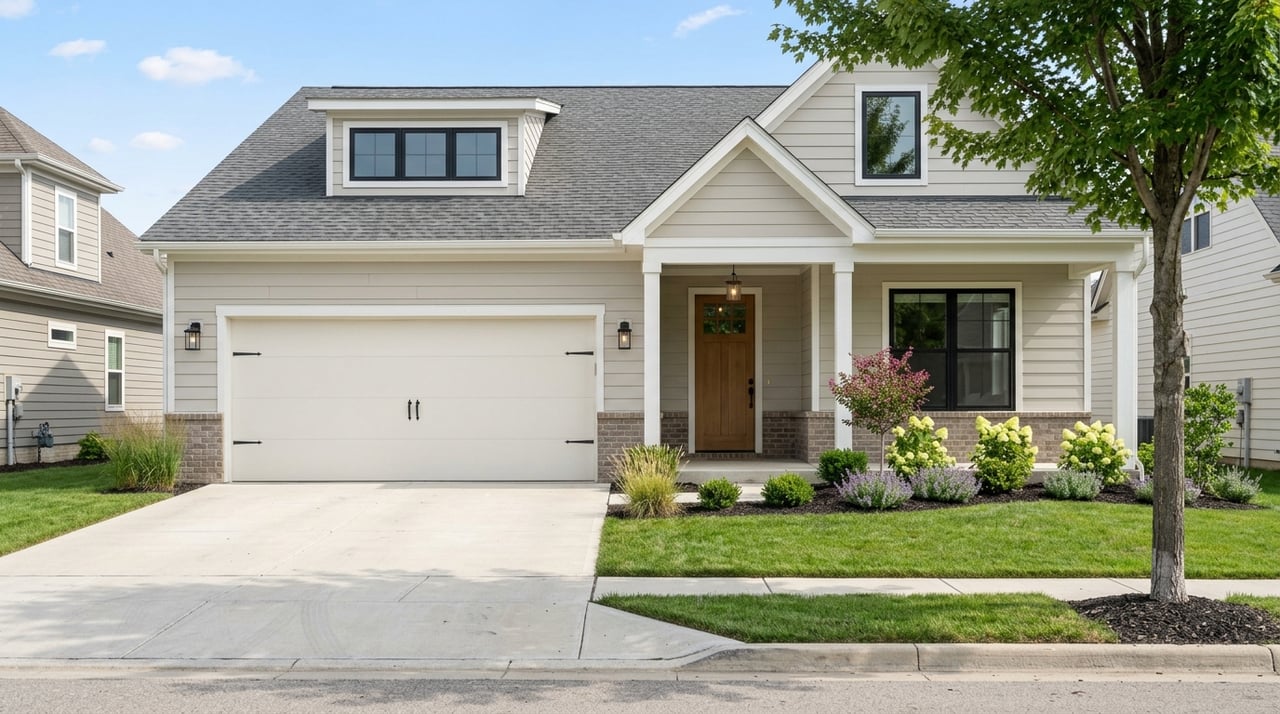
What Drives Home Prices in the Bloomington Normal Housing Market
June 4, 2026
June 4, 2026
If you are watching home prices in Bloomington-Normal, the job market deserves your attention. Local employment trends shape who is moving in, how confident buyers feel, and how much competition sellers may face. When you understand the connection, it becomes easier to make a smart move whether you are buying, selling, or just planning ahead. Let’s dive in.
Home prices do not move on housing data alone. They also reflect how many people are working, what types of jobs are available, and how stable those payrolls look over time.
In Bloomington-Normal, that matters because the local economy is supported by several major sectors rather than one single employer type. Insurance, higher education, healthcare, and government all play an important role in local demand. That kind of mix can help create a steadier housing market than a community that depends heavily on one industry.
One of the clearest strengths in this market is its range of major employers and institutions. Bloomington remains the headquarters for State Farm, which says it has 13,000 Bloomington-based associates. COUNTRY Financial also lists Bloomington-Normal as its home office.
Higher education adds another layer of stability. Illinois State University reported 21,994 students for fall 2025, Illinois Wesleyan enrolls about 1,600 students at its Bloomington campus, and Heartland Community College’s main campus is in Normal. Those institutions support housing demand not only from students, but also from faculty, staff, and relocating households.
Healthcare is another major anchor. Carle BroMenn Medical Center in Normal is a 200-bed hospital with nearly 2,000 team members and more than 100 doctors and advanced providers. OSF St. Joseph Medical Center in Bloomington is a 152-bed Level II Trauma Center with maternity, pediatric, and surgical services.
Recent labor data shows a market that is still supported by broad employment, even with some softening. The preliminary April 2026 unemployment rate for Bloomington-Normal was 4.5%, with a civilian labor force of 92.9 thousand and employment of 88.8 thousand.
Total nonfarm wage-and-salary employment was 92.8 thousand, which was down 1.9% year over year. Even so, the local job base remains spread across several sectors, including financial activities with 17.9 thousand jobs, government with 17.0 thousand, and education and health services with 12.6 thousand.
That spread matters for housing. A broad employer mix can reduce the risk that one business change will fully reshape local demand. It does not remove risk, but it can help support steadier buyer activity over time.
Jobs support home prices, but wages influence how far prices can realistically rise. In the third quarter of 2025, average weekly wages in the Bloomington area were $1,278, compared with $1,459 nationally.
That gap helps explain an important part of the local story. Bloomington-Normal has healthy housing demand, but local incomes still create a practical ceiling on what many buyers can afford. In simple terms, the market can be competitive without reaching the pricing levels seen in larger or higher-wage metros.
Current housing data shows a market that is active, competitive, and still mid-priced compared with broader benchmarks. In April 2026, Bloomington’s median sale price was $254,868, up 8.0% year over year. Homes there sold in 47 days on average, with a 98.8% sale-to-list ratio.
Normal posted even tighter conditions. Its April 2026 median sale price was $273,359, up 5.1% year over year, with homes selling in 38 days on average and a 101.1% sale-to-list ratio.
That difference is worth noticing if you are entering the market. Bloomington is still competitive, but Normal is moving faster and showing stronger seller-favorable conditions based on sale-to-list ratio and days on market.
The two cities are closely connected, but they do not move exactly the same way. Normal appears a bit tighter and more competitive, and that lines up with the concentration of university and medical demand in and around its major institutional corridors.
That does not mean Bloomington is weak. It means buyers and sellers should avoid treating the entire area as one identical market. Small differences in employer concentration, commute patterns, and demand can affect pricing, timeline, and negotiation leverage.
Bloomington-Normal sits below both state and national median sale prices. Illinois had a statewide median sale price of $314,200 in March 2026, and the national median sale price was $327,918 in April 2026.
That makes Bloomington and Normal more affordable than those broader benchmarks, even as local demand remains healthy. For many buyers, this can make the area appealing because it offers a stronger employment base than some nearby cities while still staying below statewide and national pricing levels.
Nearby Central Illinois comparisons help show the difference. Peoria’s April 2026 median sale price was $142,926, Springfield’s March 2026 median sale price was $186,000, Decatur’s April 2026 median sale price was $114,441, and Urbana’s March 2026 median sale price was $212,000.
So where does that leave Bloomington-Normal? It is generally priced above several nearby downstate markets, but it also benefits from a more durable mix of insurance, education, and healthcare employment. That combination helps explain why prices are higher here than in some neighboring markets.
One local development to watch is State Farm’s plan to consolidate its Bloomington-based associates into Corporate South by the end of 2027. Because Bloomington remains the company’s headquarters, this should be viewed carefully as an operational change rather than simple evidence of a weakening market.
For housing, the more immediate effects may relate to office concentration, commute patterns, and employee relocation preferences. In other words, it is a relevant factor, but not a clear sign that local housing demand is falling apart. In a market with multiple employment anchors, one operational shift does not tell the whole story.
If you are buying in Bloomington-Normal, expect a market that is supported by real local demand. That is especially true in Normal, where homes have been selling faster and closer to or above asking price on average.
You should pay close attention to pricing, property condition, and timing. In a market like this, well-positioned homes can still attract strong interest, even though the area remains more affordable than many broader benchmarks.
A local strategy matters too. Looking only at broad metro trends can cause you to miss meaningful differences between Bloomington and Normal, or even between one part of town and another.
If you are selling, the job market story is generally supportive. Bloomington-Normal benefits from durable demand drivers, and current price trends show that buyers are still active.
That said, support from the local economy does not replace good preparation. Pricing accurately, presenting your home well, and understanding how your specific area compares with current conditions are still key to getting the best result.
This is where hyperlocal guidance matters. In a market that is competitive but not overheated, the details of your home and location can make a real difference in how quickly you sell and how close you get to your target price.
Bloomington-Normal’s job market helps support home prices because it is built on multiple stable sectors instead of one single industry. Insurance, higher education, healthcare, and government all contribute to a housing market that looks more durable than many one-employer towns.
At the same time, wages help keep pricing in check, which is one reason the area remains below state and national median sale prices. The result is a mid-priced, employment-supported market where Normal currently looks a bit tighter than Bloomington.
If you are trying to buy or sell in Bloomington-Normal, local context matters. The right plan starts with understanding how job trends, pricing, and neighborhood-level competition fit together for your specific move. If you want experienced local guidance with a personal, owner-led approach, connect with The Move Smart Group LLC for a free consultation.
Stay up to date on the latest real estate trends.

We love to help our clients and no price of a home is too small or large. We have a marketing plan for all of our customers.
3300 W WILLOW KNOLLS DR STE A PEORIA IL 61614